Can Intensive Outpatient Programs (IOP) Actually Help My Child Succeed in School?
Can Intensive Outpatient Programs (IOP) Actually Help My Child Succeed in School?
School is where teens spend most of their waking hours. It's where they learn. It's where they build identity, friendships, and confidence. But for a struggling teen, school becomes the place where everything falls apart.
The panic before first period. The stomach ache at lunch. The assignments that pile up because focusing feels impossible. The missed days turning into weeks. Parents watch and wonder: can my teen go back to school? Will treatment actually help them function again, or is homebound schooling our only option?
The honest answer is that intensive outpatient programs exist precisely for this moment. Not to keep your teen out of school. To help them get back, and thrive once they're there.
Mind Above Matter's IOP programs in Dallas-Fort Worth serve families facing exactly this choice. The data and real-world experience show that structured, intensive mental health treatment paired with school engagement significantly improves academic outcomes and teen confidence. The key is understanding how IOP works alongside school, not instead of it.
How School Struggles Signal the Need for More Support
Teen school avoidance isn't laziness or defiance. It's a symptom. Depression drains energy and motivation. Anxiety produces physical symptoms that feel dangerous. Trauma creates hypervigilance that makes the school environment feel unsafe. When a teen's mental health is unmanaged, school becomes nearly impossible.
The American Psychological Association notes that anxiety disorders affect up to 8% of adolescents, and depression affects roughly 5% of teens. The American School Counselor Association reports that untreated mental health conditions are among the top barriers to academic success. A teen struggling with unmanaged anxiety or depression isn't choosing to fail. Their brain is working against them.
And here's what happens next: one day missed becomes three. Three becomes two weeks. Missing assignments multiply. Grade drops trigger shame. The teen spirals deeper into isolation, and the thought of returning becomes even scarier.
Weekly therapy alone often can't interrupt this spiral fast enough. The teen thinks about the hard stuff for one hour per week, then lives with unmanaged symptoms for the other 119 hours. The gap between insight and action becomes unbridgeable.
This is where intensive outpatient programs change the calculus.
What IOP Actually Is (And How It Fits With School)
An intensive outpatient program is daily or near-daily structured mental health treatment that happens outside of the hospital setting. Your teen attends treatment sessions in the morning or evening depending on whether school is their priority, then goes home at night.
Here's the critical part: IOP isn't designed to replace school. It's designed to make school possible again.
Most IOP programs, including Mind Above Matter's Lewisville location, offer flexible scheduling specifically so teens can maintain school enrollment. Evening IOP lets a teen attend regular school during the day, then come to treatment from 4 PM to 7 PM or 6 PM to 8 PM. Daytime IOP exists for teens who need to step out of traditional school temporarily but want the structure of being somewhere purposeful every day.
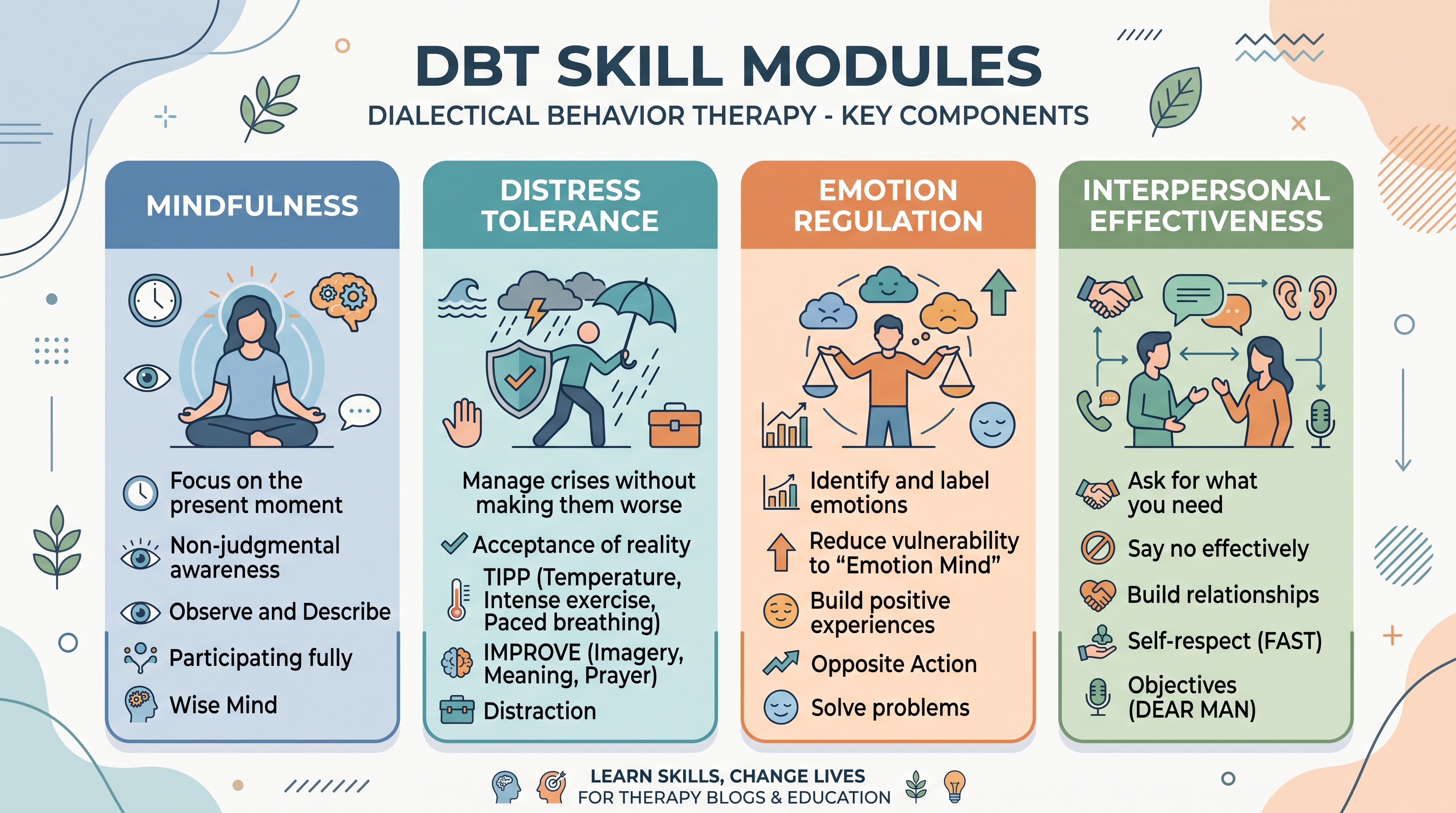
The content of IOP directly supports academic success. Teens learn cognitive behavioral therapy skills to manage anxiety and depression. They practice distress tolerance for the moments when emotions feel unmanageable. They work on emotion regulation, executive functioning, and interpersonal skills that transfer directly to school performance. They get psychiatric support if medication would help. And crucially, they're in a group with other teens, which normalizes what they're experiencing and reduces isolation.
Research from the Journal of the American Academy of Child & Adolescent Psychiatry confirms that IOP is effective for adolescents with anxiety and depression when school participation is a concurrent goal. The structure matters. The intensity matters. The professional oversight matters.
The Connection Between Intensive Treatment and Academic Recovery
Think about what happens in a typical week of IOP.
Day one: Your teen attends their first group therapy session where they learn cognitive behavioral therapy principles. They identify an anxious thought pattern keeping them stuck about school. They practice examining evidence for and against the thought.
Day two: They're in individual therapy with a clinician who helps them apply that same skill to their specific school anxiety. The clinician might coach them on gradual exposure, working backward from the feared situation into smaller, more manageable steps.
Days three through five: They're in group again, practicing distress tolerance skills. They're meeting with a psychiatric provider who may adjust medication. They're in family therapy where parents learn to support school attendance even when anxiety is high, how to respond calmly to resistance, and how to reinforce effort rather than just outcomes.
That's five days of structured, professional support all pointing toward the same goal: get this teen back into a functional relationship with school.
By week three or four of IOP, something shifts. A teen who hasn't attended school in two months goes for a full day without major distress. A teen who's been failing multiple classes now has the mental clarity to focus on homework. A teen who believed everyone at school was judging them realizes this thought doesn't match reality.
Parents notice too. The teen is sleeping better. They're not in crisis mode every evening. There's actual conversation happening instead of shutdown. The household feels less chaotic because the acute mental health crisis is being actively managed.
Does the anxiety or depression disappear? Usually not fully by week four. But it becomes manageable. The teen and parents both have new skills. The pathway back to school is visible.

Family Involvement: The Secret Ingredient in School Success
Here's something that gets overlooked in traditional school support plans. Parents are either helping or hindering school attendance, often without realizing it.
An anxious teen says "I can't go to school." A parent who doesn't understand anxiety might think the solution is more pressure. They argue, threaten consequences, or drag the teen to school despite obvious distress. The teen's anxiety intensifies. Going to school becomes associated with parent conflict on top of the anxiety itself.
Alternatively, a parent trying to be supportive might say "if school is too much, we can work around it." They keep the teen home. The short-term anxiety drops. But the brain learns a false lesson: school really is dangerous, and avoidance works. The anxiety actually increases next time school is attempted.
Family therapy in IOP teaches parents the middle path. Your teen's anxiety is real. Your support matters. And true support means staying calm and firm about school attendance while acknowledging the fear. It means saying "I know you're scared, and I believe you can handle it. Let's figure out what you need to make it work."
That consistency across treatment is powerful. The clinician and the teen are working on the same skills in group and individual sessions. The parents are reinforcing those skills at home. The teen experiences clarity about what recovery actually looks like. School becomes possible again not because the anxiety vanished, but because everyone is pulling in the same direction.
Specific Ways IOP Supports Academic Success
Beyond the general mental health benefits, IOP addresses specific academic challenges.
Executive functioning struggles often accompany anxiety and depression. A teen might understand the assignment but struggle with organization and time management. IOP includes coaching on these skills: breaking projects into steps, using timers, organizing materials.
School avoidance triggers isolation, which makes learning harder. Group therapy addresses social anxiety directly. A teen learns that reconnecting with classmates is part of recovery, not a separate goal. They practice social skills in a safe group environment, then apply them at school.
Some teens need medication to access their thinking clearly enough to benefit from any therapy. IOP psychiatric providers evaluate this without gatekeeping. If a teen needs an SSRI to reduce anxiety enough to go to school, they prescribe it.
Academic accommodations often become important too. A teen with documented mental health treatment might qualify for a 504 plan or modified school schedule through an IEP. Mind Above Matter clinicians work with schools to facilitate these conversations. A teen might need extended test time or permission to leave class for a brief anxiety reset. These accommodations aren't permanent crutches. They're temporary supports while the teen rebuilds capacity.
And perhaps most importantly, IOP interrupts the shame cycle. A teen in treatment is actively doing something about their struggle. Clinicians and peers acknowledge the difficulty and respect the effort. The teen begins to see themselves as someone working on recovery, not as broken or incapable.
Real Timelines: What to Expect
IOP isn't magic. It also isn't slow.
Many teens show academic improvement within 2 to 3 weeks of starting treatment. They might complete assignments they've been avoiding. They might return to school for partial days instead of nothing. Anxiety or depression is still present, but it's no longer paralyzing.
By week four, most teens have experienced enough success and skill-building to feel genuine momentum. They're attending school more consistently. Their grades are starting to stabilize. They're sleeping better. Parents see real change.
The full benefit—where the teen is functioning well in school, managing residual anxiety or depression with tools, and engaging in social connections—typically takes 8 to 12 weeks of consistent treatment. This isn't because IOP is slow. It's because building new neural pathways and rebuilding confidence takes time.
The alternative is letting the school crisis continue, which can mean a year or more of increasing isolation and academic fallout.
Cost, Insurance, and Access
Parents often worry that intensive treatment is prohibitively expensive. Here's what actually happens.
Most major commercial insurance plans and Medicaid cover IOP. Mind Above Matter handles insurance verification and pre-authorization on behalf of families. Out-of-pocket costs vary based on insurance, but many families pay $20-50 per session if their plan covers IOP at the standard rate.
For uninsured families, Mind Above Matter offers sliding scale fees and financing options. The team explicitly works to remove cost barriers because the cost of a teen falling further behind academically is far higher than the cost of early intervention.
Virtual IOP options are also available for Texas families who can't easily travel to Dallas-Fort Worth clinics.
FAQ: IOP and School Success
Will my teen fall behind academically during IOP?
This is a real concern, but the answer is usually no. Most teens make up academic ground quickly once they're no longer in acute crisis. Some enroll in virtual school or summer programs to catch up if they've missed substantial time. The key is that IOP removes the barrier to learning, rather than creating another barrier.
Can my teen attend their regular school while doing evening IOP?
Yes, that's the whole point. Evening IOP allows most teens to maintain their regular school and social connections while getting intensive mental health support.
What if my teen needs to step out of school temporarily?
Some teens benefit from stepping out of traditional school for 4-6 weeks, attending daytime IOP, then re-entering school once skills are established. This is discussed during assessment and treated as a temporary measure, not a permanent change.
How do I talk to my teen's school about IOP?
You're not required to disclose mental health details. But it often helps to notify the school that your teen is receiving clinical treatment for anxiety or depression and will be resuming school soon. The clinical team can facilitate communication if needed.
What if medication is recommended?
Psychiatric providers at Mind Above Matter recommend medication only when clinically indicated and discuss side effects and benefits. Many teens improve substantially with therapy and skills alone. Some benefit from medication. The goal is always to use the minimum support needed for actual progress.
When School Struggles Signal Readiness for Help
If your teen is experiencing any of these, IOP assessment makes sense.
School avoidance or refusal. Missing multiple days per month without physical illness. Significant grade drops or inability to complete assignments despite academic capability. Social withdrawal or isolation at school. Panic attacks or physical anxiety symptoms triggered by school situations. Sleep problems that interfere with school attendance. Expressed hopelessness or statements suggesting they can't handle school.
These don't automatically mean your teen needs IOP. They mean a mental health assessment would be helpful. Mind Above Matter offers free evaluations to determine what level of care actually fits.
The Real Question
The question isn't whether IOP can help your teen succeed in school. Research and clinical experience both show it can. The real question is whether you're ready to intervene early and intensively when you see your teen struggling.
For many families, the hardest part isn't the logistics or the cost. It's accepting that their teen needs help and being willing to ask for it.
Your teen's brain is telling them that school isn't safe, or that they can't do it. That's not the truth about your teen's capability. That's a mental health symptom. And mental health symptoms respond to targeted, professional intervention. Mind Above Matter's programs exist because school success depends on mental health stability, and recovery is possible when you get the right support.
The right time to act is now, before another month of school is lost, before shame deepens, before the teen's belief that they're incapable becomes entrenched.
Contact Mind Above Matter for a confidential assessment of your teen's needs. We'll help you understand whether IOP or another level of care is the right fit. And we'll get your teen back to school, equipped with real skills and genuine hope.