How DBT Skills Help Teens Manage Anxiety: A Guide for Dallas-Fort Worth Families
How DBT Skills Help Teens Manage Anxiety: A Guide for Dallas-Fort Worth Families
Anxiety in teenagers is more common than ever. Between social pressures, academic demands, and the overwhelming noise of social media, many teens in the Dallas-Fort Worth area struggle with persistent worry, panic attacks, and avoidance behaviors that interfere with daily life. If your teen is experiencing anxiety, you're not alone. According to recent data, one in five teens experiences clinical anxiety, and the numbers have risen significantly over the past decade.
But here's the hopeful part: anxiety is highly treatable, especially when addressed early with evidence-based approaches. One of the most effective methods for helping teens manage anxiety is Dialectical Behavior Therapy, or DBT. This evidence-based approach teaches teens specific, practical skills to manage overwhelming emotions and reduce anxiety in real time, not just during therapy sessions but in their actual daily lives.
Mind Above Matter uses DBT as a core component of our IOP (Intensive Outpatient Program) and PHP (Partial Hospitalization Program) to help teens across the Dallas-Fort Worth area reclaim control of their mental health. Whether your teen is struggling with generalized anxiety, social anxiety, panic attacks, or trauma-related anxiety, DBT provides the framework for real, lasting change.
What Is DBT and Why Does It Work for Anxiety?
DBT was originally developed by psychologist Marsha Linehan in the late 1980s to treat Borderline Personality Disorder. Today, it's widely recognized as one of the most effective treatments for a range of mental health challenges, including anxiety disorders, depression, trauma-related conditions, and even eating disorders. It has become the gold standard for intensive mental health treatment.
Unlike some therapy approaches that focus solely on understanding the past or on changing thoughts alone, DBT emphasizes practical, actionable skills you can use right now. It combines cognitive-behavioral techniques (understanding how our thoughts, feelings, and behaviors are connected) with mindfulness and acceptance strategies. The result is a therapy that teaches teens to tolerate distress, regulate emotions effectively, and build a life worth living.
For anxiety specifically, DBT works because it addresses the root problem: the gap between how teens feel and what they're trying to avoid. Here's what typically happens in anxiety: A teen feels anxious, so they avoid the situation. Avoidance feels good in the short term, but it teaches the brain that the thing they avoided must be dangerous. The anxiety actually increases over time.
Rather than running from anxiety, DBT teaches teens to sit with uncomfortable emotions while taking meaningful action toward their values. This might sound counterintuitive, but research consistently shows this approach reduces anxiety more effectively than avoidance or distraction. By facing anxiety with skills and support, teens eventually learn that the anxiety passes naturally, and they can handle it.
The Four DBT Skill Modules for Managing Anxiety
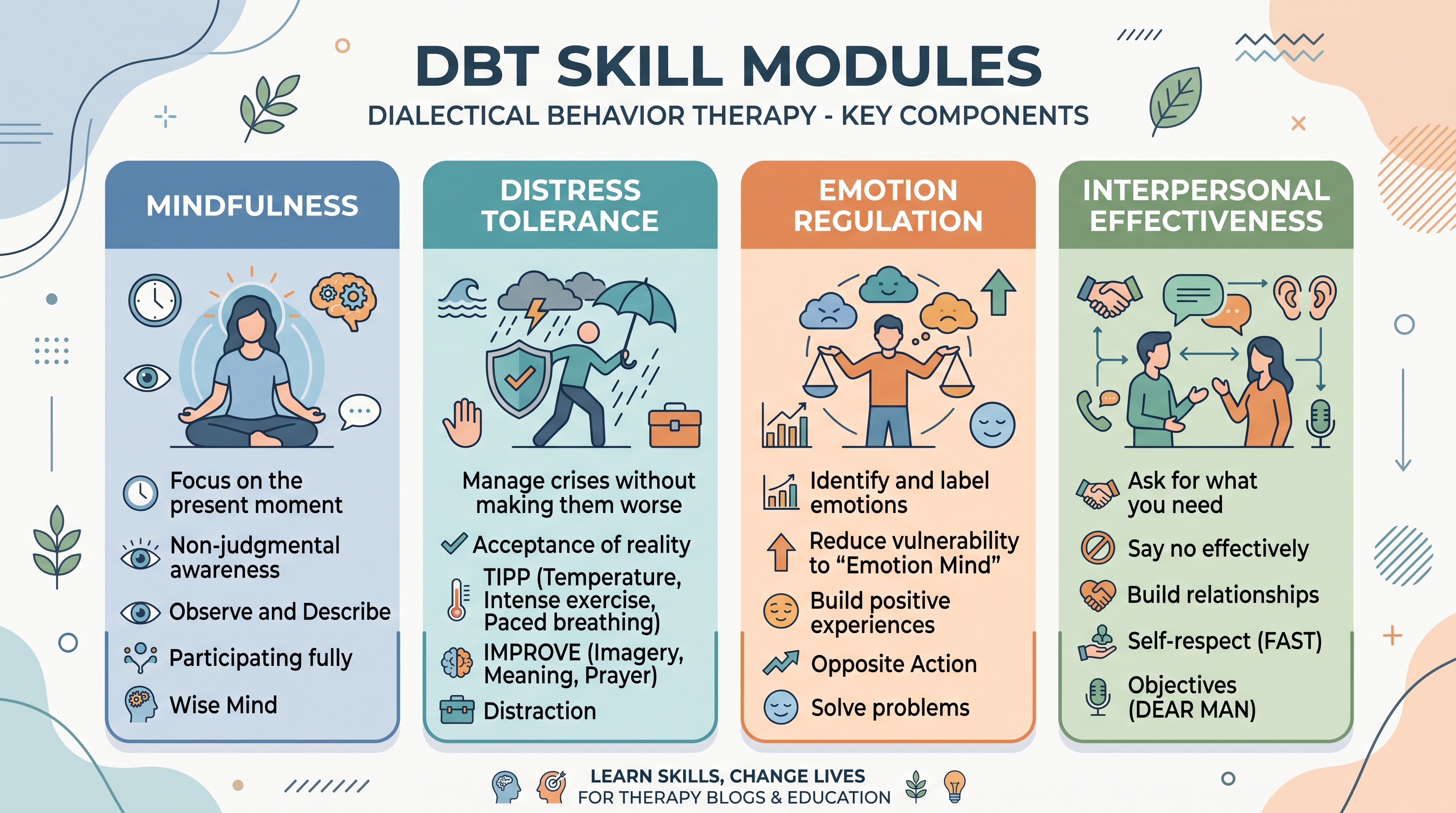
DBT is organized into four core skill modules, each taught in sequence. Each addresses a different aspect of emotional regulation and distress tolerance. At Mind Above Matter, our clinical team teaches all four modules in rotation, but for anxiety specifically, certain skills are particularly powerful and often the first focus.

Mindfulness: Observing Anxiety Without Judgment
Mindfulness is the foundation of all DBT skills. It teaches teens to notice their anxiety without getting swept up in it or fighting against it. Instead of thinking "I'm anxious, something bad will happen," DBT mindfulness teaches teens to think "I'm noticing anxiety. This is a sensation. It will pass." This subtle shift is powerful.
Mindfulness in DBT includes specific practices like observing sensations without judgment, noticing thoughts as thoughts (not facts), and focusing on the present moment. When a teen learns to observe their anxiety this way, they reduce the panic response that often makes anxiety worse. They're literally changing their relationship with the anxiety.
In our IOP and PHP programs, teens practice mindfulness during group sessions and individual therapy, as well as through guided meditation activities throughout the day. Over time, this skill helps reduce the panic and rumination that fuels anxiety spirals. Many families notice their teens becoming noticeably calmer just from consistent mindfulness practice.
Distress Tolerance: Surviving Crises Without Making It Worse
Anxiety often creates a crisis feeling, even when there's no real danger. A teen might feel a panic attack coming and think "I can't handle this" or "Something is seriously wrong." DBT distress tolerance skills teach teens to get through high-anxiety moments without turning to unhealthy coping mechanisms like substance use, self-harm, or digital avoidance that might feel good temporarily but make things worse overall.
One of the most effective distress tolerance skills is TIPP: Temperature (holding ice or splashing cold water), Intense Exercise (running, jumping), Paced Breathing (breathing in a controlled way), and Paired Muscle Relaxation (tensing and releasing muscles). These skills work directly through the nervous system to quickly reduce acute anxiety. When a teen feels panic rising, they can use these skills to bring their body back into a calm state, creating space for rational thinking.
Distress tolerance also includes skills like self-soothing (engaging the five senses), distracting (engaging in activities), and radical acceptance (accepting reality even when it's painful). These aren't permanent solutions; they're meant to get a teen through the acute phase of anxiety so they can use other skills.
Emotion Regulation: Building Stability in Daily Life
This module addresses the underlying conditions that make anxiety worse: sleep deprivation, poor nutrition, isolation, and lack of meaningful activity. DBT emotion regulation teaches teens to identify what fuels their anxiety and build daily habits that reduce vulnerability to emotional spikes. When a teen's basic needs are met, their anxiety baseline is naturally lower.
It includes the PLEASE skill (Physical health, Loved ones, Eating, Avoiding substances, Sleep, Meditation), which addresses basic self-care as a foundation for emotional stability. Teens learn that exercising, sleeping 8 hours, eating regular meals, maintaining friendships, and practicing mindfulness aren't luxuries; they're essential maintenance that keeps anxiety manageable.
Emotion regulation also teaches specific techniques for changing emotions: opposite action (doing the opposite of what anxiety is telling you to do), problem-solving, and working with values. For many anxious teens, this module is transformative because it shows them they have more control over their anxiety than they thought.
Interpersonal Effectiveness: Speaking Up Without Anxiety Shutdown
Social anxiety and conflict avoidance are extremely common in anxious teens. Anxiety tells them to avoid people and situations, which increases isolation and makes depression more likely. DBT interpersonal effectiveness teaches teens how to ask for what they need, say no when they need to, and resolve conflict in ways that strengthen relationships rather than create distance.
Skills like DEAR MAN (Describe, Express, Ask, Reinforce), GIVE (Gentle, Interested, Validate, Easy manner), and FAST (Fair, Apologize when appropriate, Stick to values, Truthful) provide concrete frameworks for navigating social situations. These aren't rigid scripts; they're flexible approaches that help teens communicate authentically even when anxiety is present.
This module directly addresses the isolation that often accompanies anxiety, helping teens rebuild social connections that are protective factors against anxiety escalation. Many teens report that being able to ask for help or set boundaries actually reduces their anxiety significantly.
How Mind Above Matter Integrates DBT Into IOP and PHP Programs
In our Dallas-Fort Worth locations, DBT isn't just a technique our therapists use occasionally. It's the foundation of our entire clinical curriculum. Everything we do in our programs is organized around teaching and reinforcing DBT skills. Here's how we implement it:
In our Intensive Outpatient Program (IOP), teens attend 2-3 hours daily, Monday through Friday, receiving individual therapy, group skills training, and psychiatry sessions. Group skills training covers one DBT module per week on a rotating basis, so teens see the complete curriculum every month and have time to practice each skill set thoroughly. Individual therapy uses DBT techniques to address each teen's specific anxiety triggers.
Our Partial Hospitalization Program (PHP) is more intensive, with teens attending 6-7 hours daily. This extended time allows for deeper processing of anxiety triggers and more frequent practice of DBT skills during structured group environments and therapeutic milieu. For teens with severe anxiety, this immersive approach often produces faster results.
Both programs include multidisciplinary teams: psychiatrists who can address any biological contributors to anxiety, therapists trained in DBT, case managers, and therapeutic support staff. This coordinated approach ensures teens aren't just learning skills in therapy; they're practicing them in real time during the program day, in groups with peers, and getting coaching from multiple perspectives.
The Evidence: Does DBT Really Help Anxiety?
The research is clear and compelling. Numerous peer-reviewed studies show that DBT reduces anxiety symptoms, increases coping skills, and improves quality of life in teenagers. A study published in the Journal of Behavioral and Cognitive Psychotherapy found that teens who completed DBT-informed anxiety treatment showed significant reductions in both anxiety and depression compared to control groups. The improvements were still present at follow-up 6 months later.
At Mind Above Matter, we track outcomes carefully and transparently. Approximately 85% of clients report measurable improvement in anxiety symptoms within the first 8 weeks of our program. Many experience noticeable relief even sooner. Teens report being able to attend school more regularly, participate in social activities again, and feel significantly less overwhelmed by worry.
The key is not just learning the skills but practicing them repeatedly in a supportive environment with coaching from trained clinicians. DBT requires commitment from both the teen and their family. Teens need to attend sessions consistently, practice skills between sessions through homework assignments, and be willing to tolerate some initial discomfort as they change long-standing anxiety patterns. But for teens ready to do the work, the results are genuinely transformative.
Is Your Teen Ready for an IOP or PHP Program?
If your teen is struggling with anxiety that's interfering with school, friendships, family relationships, or daily functioning, it might be time to consider a more intensive treatment program. Many families wait too long, thinking their teen will just "get over it" or that once-weekly therapy will eventually be enough. But for significant anxiety, more intensive support is often what's needed.
Signs that your teen could benefit from an IOP or PHP program include:
- Anxiety that doesn't improve with standard weekly therapy over 2-3 months
- Panic attacks that happen multiple times per week or daily
- Avoidance of school, social situations, or activities they used to enjoy
- Physical anxiety symptoms that interrupt daily life
- Anxiety that's worsening despite medication
- Thoughts of harming themselves related to anxiety overwhelm
- Increased isolation or loss of friendships
- Declining grades or school attendance
Both IOP and PHP provide the structured, intensive support teens need to break anxiety cycles and learn new patterns. The difference is in intensity and flexibility. IOP is right for teens who need significant support but can safely return home each evening. PHP is appropriate when anxiety is so severe that a teen needs a higher level of supervision and therapeutic milieu to stabilize.
Learn more about insurance and access options for our programs so you can understand what fits your family's needs and budget.
Your teen's intake clinician will help you determine which level of care is the right fit based on symptom severity, safety considerations, and family situation.
FAQ: DBT Skills and Teen Anxiety Treatment
How long does it take to see improvement from DBT?
Many teens report noticeable improvement within 2-3 weeks once they begin practicing skills consistently in a structured program. Significant, sustainable change typically takes 8-12 weeks. The timeline depends on several factors: the severity of anxiety, the teen's motivation to practice skills consistently, whether they have a strong support system, and whether medication adjustments are needed alongside therapy. Some teens see dramatic improvements in just 4-6 weeks once they understand and start applying the skills.
Will DBT work if my teen is taking anxiety medication?
Absolutely, and in fact, they often work better together. DBT and medication complement each other. If a teen's anxiety is severe, medication can help bring the anxiety level down enough that they can engage effectively in DBT skills training. Without some baseline stability from medication, learning new skills can feel impossible. Both approaches address different aspects of anxiety: medication helps with the biological component, while DBT provides the practical tools for managing thoughts and behaviors. Our psychiatrists and therapists work together to optimize both.
Can DBT help with social anxiety specifically?
Yes, absolutely. Social anxiety is particularly responsive to the interpersonal effectiveness and mindfulness modules of DBT. These skills teach teens how to navigate social situations with anxiety present, rather than waiting for anxiety to disappear before engaging socially. With coaching and practice, teens gradually realize that social situations are survivable, even with anxiety. Over time, this gradual exposure through DBT reduces the anxious response to social situations significantly.
Is DBT appropriate for all teens with anxiety?
DBT works best for teens who are motivated and able to commit to consistent practice. It's not a passive treatment where you just take a pill or attend sessions. Teens need to attend sessions regularly, complete homework assignments between sessions, and use skills outside of therapy. That said, our clinical team works with each teen to adapt the approach to their learning style, developmental level, and motivation level. We've successfully adapted DBT for teens as young as 13 and for those with varying levels of motivation.
What happens after the IOP or PHP program ends?
The goal of our program is to teach your teen skills they'll use for life. After discharge, we recommend ongoing outpatient therapy once weekly with a therapist trained in DBT, plus psychiatry follow-ups as needed to monitor medication. Many teens continue using the skills they learned at Mind Above Matter long after the intensive program ends. The difference is they're managing their anxiety independently now, with less frequent clinical support. Some families choose to continue with us for outpatient follow-up care, while others transition to providers closer to their home.
Next Steps: Getting Help for Your Teen's Anxiety
If your teen is struggling with anxiety in the Dallas-Fort Worth area, Mind Above Matter is here to help. Our clinical team has successfully treated hundreds of anxious teens using DBT-informed approaches. We offer both IOP and PHP programs, flexible insurance options, and a compassionate approach to teen mental health that respects each teen's individuality.
The first step is a confidential assessment. Our intake clinicians will listen closely to your teen's specific anxiety symptoms, assess what level of care is appropriate, answer your questions about our program, and explain the insurance and cost options. We accept most commercial insurance plans and Medicaid.
Anxiety doesn't have to control your teen's life. With the right support and proven skills like DBT, your teen can learn to manage anxiety effectively and build a future they're genuinely excited about. Contact Mind Above Matter today to schedule an evaluation. Your teen's transformation could start this week.